
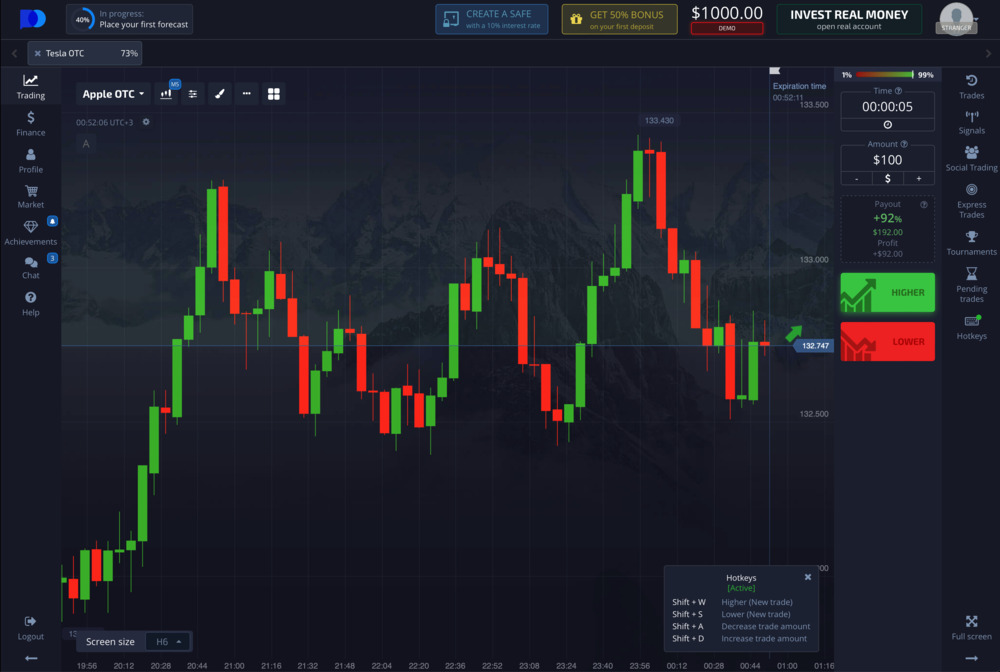
Pocket Option Chart Setup and Analyses
When it comes to trading on Pocket Option, understanding how to properly set up and analyze charts can be the key to success. A well-configured chart allows traders to identify trends, support and resistance levels, and potential entry and exit points. In this article, we’ll explore essential aspects of chart setup and analysis, shedding light on various tools and techniques that can enhance your trading strategies. If you want to dive deeper into this topic, you can also check out Pocket Option Chart Setup and Analyses Pocket Option Настройка и аназиз графиков.
Understanding the Basics of Chart Setup
Before getting into the complexities of chart analysis, it’s crucial to understand the fundamental elements involved in setting up a chart on Pocket Option. Here are the critical components:
- Chart Type: Pocket Option offers various chart types, including line, bar, and candlestick charts. Each type serves a different purpose, with candlestick charts being the most popular among traders due to their detailed representation of price movements over time.
- Time Frame: Selecting the right time frame is essential. Traders can choose from minutes to hours or even days. Shorter time frames are preferable for scalping strategies, while longer time frames are more suited for swing trading.
- Indicators: Indicators are tools that can help in interpreting market data. Common indicators include moving averages, RSI (Relative Strength Index), and MACD (Moving Average Convergence Divergence). These can be added to your chart to assist in making decisions.
Choosing the Right Indicators
Indicators play a pivotal role in chart analysis. Knowing which indicators to use and how to interpret them can give traders an advantage. Here are a few popular indicators to consider:
1. Moving Averages
Moving averages smooth out price data to identify trends over a specific period. Traders often use two moving averages (e.g., a short-term and a long-term) to spot trends and reversals. A crossover of the short-term moving average above the long-term is often seen as a buy signal, while a crossover below indicates a sell signal.

2. RSI (Relative Strength Index)
The RSI helps to identify overbought or oversold conditions in the market. It ranges from 0 to 100, with readings above 70 indicating overbought and below 30 indicating oversold conditions. By using RSI effectively, traders can anticipate potential price corrections.
3. MACD (Moving Average Convergence Divergence)
The MACD is a trend-following momentum indicator that shows the relationship between two moving averages of a security’s price. The crossing of the MACD line above the signal line can signal a potential buy, and vice versa for a sell.
Technical Analysis Techniques
While indicators are valuable, traders should also employ various technical analysis techniques to enhance their chart analysis.
1. Support and Resistance Levels
Identifying support and resistance levels is crucial for predicting potential price movements. Support refers to a price level where a downtrend can pause due to buying interest, while resistance is a level where an uptrend may stall due to selling pressure. Traders often place buy orders near support levels and sell orders near resistance levels.
2. Trend Lines
Drawing trend lines helps traders visualize the direction of the market. An upward trend line is drawn by connecting higher lows, while a downward trend line connects lower highs. Trend lines can signal potential reversal points and are useful in confirming trends.
3. Chart Patterns

Chart patterns such as head and shoulders, triangles, and flags provide insights into potential future price movements. Recognizing these patterns can offer traders entry and exit signals. For instance, a bullish flag pattern may indicate a continuation of an upward trend, while a bearish head and shoulders could signal a reversal.
Implementing a Trading Strategy
Once you have set up your chart and performed your analysis, it’s time to implement a trading strategy that aligns with your findings. Several strategies can be employed, including:
1. Trend Following
This strategy involves identifying and following the direction of the market trend. Traders can place trades in the same direction as the trend, utilizing indicators such as moving averages for confirmation.
2. Breakout Trading
Breakout trading focuses on entering a position when the price breaks through a significant support or resistance level. This strategy often results in substantial price movements, making it a favorite among many traders.
3. Pullback Trading
Pullback trading occurs when a trader enters the market during a temporary reversal in the direction of the prevailing trend. Using Fibonacci retracement levels can help identify potential pullback levels for entry points.
Conclusion
Mastering the art of Pocket Option chart setup and analysis can provide traders with the tools needed to enhance their trading outcomes. By focusing on the right indicators, utilizing technical analysis techniques, and implementing a solid strategy, traders can navigate the markets more effectively. Remember that trading involves risks, and it’s crucial to practice sound risk management alongside your analysis. Continuous learning and adaptation will be your best allies on this exciting trading journey.